
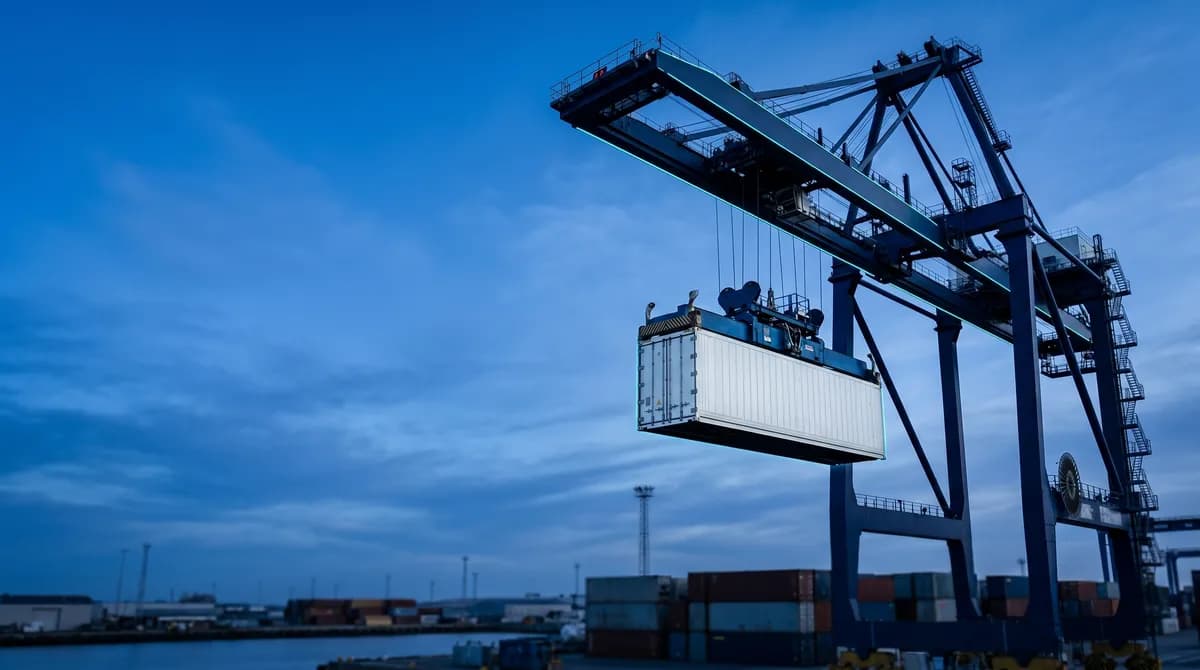
Cross-dock is the cold-chain version of an express lane. Product comes in one door, goes out another door, sits in the building for a few hours, never gets racked. Done well, it saves storage costs, shortens transit time, and reduces handling damage. Done badly, it breaks the cold chain in the worst place.
The right answer is to insist on cross-dock for certain SKUs and certain lanes, and to refuse it for others. Here is the framework.
When cross-dock is the right call
Cross-dock works when three conditions line up.
First, the inbound and outbound schedules are predictable. A cross-dock operation is a choreography. If the inbound trailer is two hours late, the outbound trailer is two hours late, and so is every load behind it. This is fine when both ends are scheduled. It falls apart when either end is loose.
Second, the SKU mix is wide on inbound and narrow on outbound, or vice versa. A classic case is foodservice distribution. Multiple co-manufacturers ship into a regional cross-dock with their own SKU files, and the cross-dock builds outbound trailers per restaurant operator. Without cross-dock that work would have to happen in rack, which is slower and more expensive.
Third, the cold-chain spec allows for two trailer-door events back-to-back. Most refrigerated SKUs do. Some pharma SKUs and ultra-frozen sashimi-grade product do not. For those, racking is the right call regardless of the schedule.
When to refuse cross-dock
Cross-dock is the wrong call when any of the three conditions fail.
If the schedule is loose on either end, cross-dock will magnify the variance. Better to rack the product, decouple inbound from outbound, and ship from rack on a separate schedule.
If the SKU mix on outbound is identical to the SKU mix on inbound (one customer, one lane), cross-dock has no value-add. You are just doing direct linehaul.
If the spec is tight (pharma, sashimi, gelato), the two door events plus dock dwell can drift the product outside spec. Rack it.
What separates a clean cross-dock from a sloppy one
The difference between a cross-dock operation that protects the cold chain and one that breaks it is the dwell time and the staging.
Clean cross-dock: inbound trailer pulls to door, seal broken at 13:00, product staged into a refrigerated lane at 13:08, outbound trailer pre-cooled to setpoint and waiting at door by 13:45, product loaded by 14:30, sealed and gone by 14:40. Total time in the building: 100 minutes. Total time off-trailer: 75 minutes.
Sloppy cross-dock: inbound trailer pulls to door, seal broken at 13:00, product staged on the dock floor (not in a refrigerated lane) at 13:15, outbound trailer arrives at 14:30 (still warm because nobody pre-cooled it), loaded by 16:00, sealed at 16:10. Total time off-cold-chain: 195 minutes. Product probably out of spec on an Ahmedabad afternoon.
The two operations look similar from the outside. They are entirely different on the inside.
What to ask your 3PL
If you are scoping cross-dock as a service, three questions cover most of it.
What is the SLA from inbound seal to outbound seal. The right answer is four hours or less, with a written incident process when it slips.
Where does product sit between inbound and outbound. The right answer is a refrigerated lane, not the dock floor. Refrigerated lanes are sized in pallet count and held at the inbound temperature class.
How is dwell time logged. The right answer is timestamped in the WMS at every transition, with reports available per move.
If the operator cannot answer those three questions in the sales meeting, the answer to "should I cross-dock with this 3PL" is probably no.
Where we run cross-dock
The Mehsana facility runs refrigerated cross-dock lanes, sized for 8 to 32 pallets, held at the inbound temperature class. The 4-hour SLA from inbound seal to outbound seal applies on every move. Temperature is logged at the inbound trailer, at the cross-dock lane, and at the outbound trailer. Customers see the full trace in their portal.
Cross-dock is about 18 percent of facility throughput and growing. It is also one of the operations we audit hardest internally, because it is the operation that breaks fastest when discipline slips. The right answer is to run it well or refuse it. There is no middle ground that ends well for the customer.